|
The Breadcrumbs widget will appear here on the published site.
From Our Friends in BrooklynPapercut Press invites authors and artists to share how they understand the world of steampunk for our upcoming science fiction and fantasy collection. Is there more to it than gears and gadgets? Is it purely industrial or can it be romantic as well? Is it magical or historical? We believe it can be any of these things, and want our collection to reflect the many faces of steampunk art and literature. Grab your quill pens and powdered ink, enchanted typewriters or Daguerreotype cameras and tell us what you think! Please send your art, stories, poems and essays of 6000 words or less to submissions@thepcpress.com. Deadline for submissions is August 10, 2012. The Breadcrumbs widget will appear here on the published site.
Taste of 'Heaven'By QB Crew QuailBellMagazine.com Keep your eyes on the bookstore shelves this autumn, fledglings. Peter Liu is releasing his first collection of short stories, titled 'Watering Heaven' from Signal 8 Press on October 16. Faithful readers of QB Mag will remember Liu's story published here, 'Unreflected.' Be sure to pick up his book and enjoy more pieces from this talented author. The Breadcrumbs widget will appear here on the published site.
Think Before You Speak By Hannah Grubbs QuailBellMagazine.com 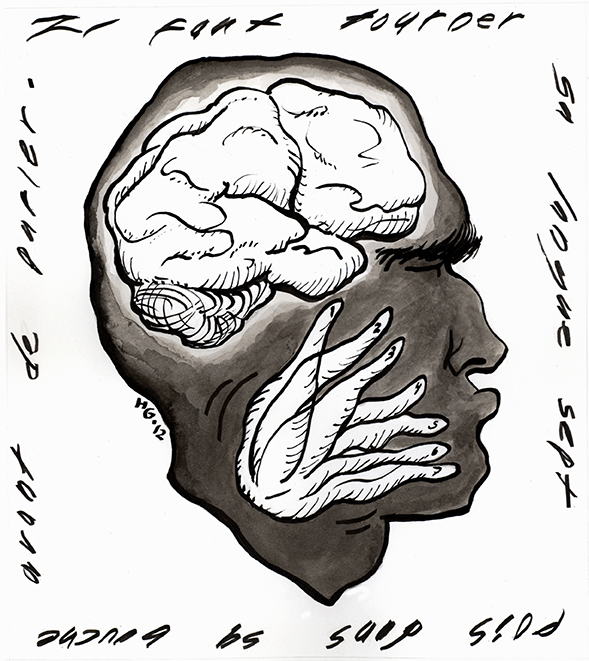 "One must turn the tongue seven times in the mouth before speaking." - French Proverb The Breadcrumbs widget will appear here on the published site.
Historic Warrenton: What to SeePhotographs by Brenden Rijke QuailBellMagazine.com 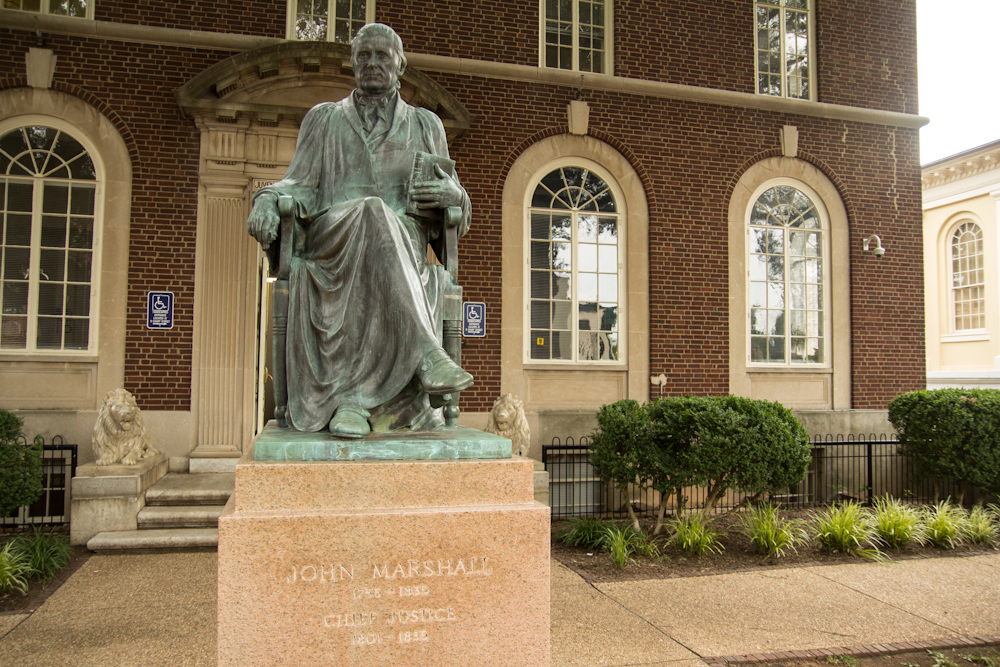 "John Marshall" - Chief Justice of the United States John Marshall (1755 - 1835), who served as Justice between the years of 1801 and 1835. His monument stands in front of the old courthouse in Old Town Warrenton as he was a Germantown resident (a small town in Fauquier County, VA now known as Midland). 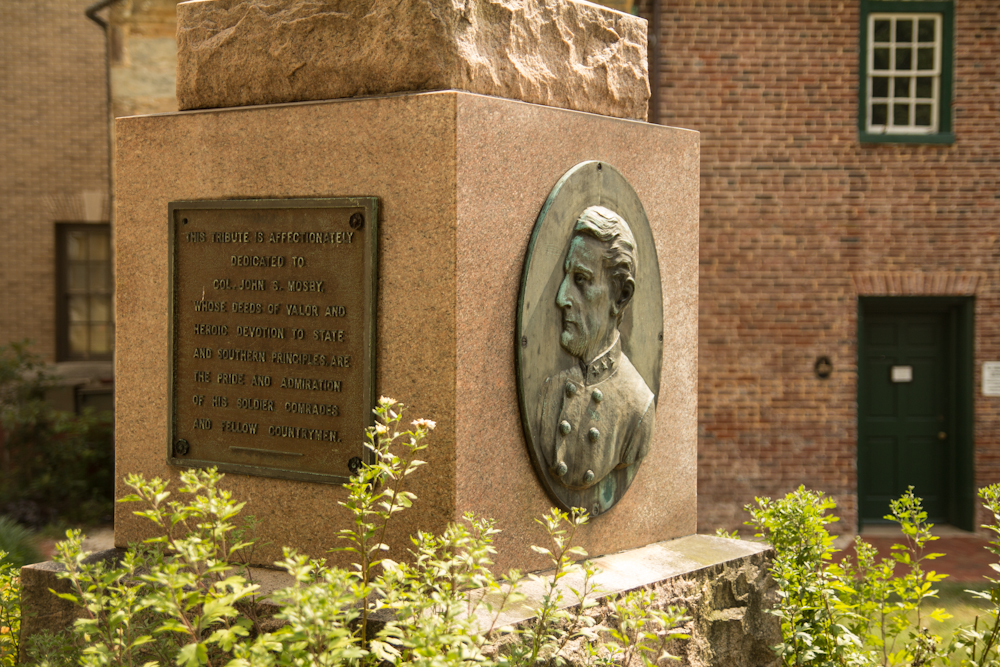 "John Singleton Mosby" - a monument in remembrance of cavalry battalion commander John S. Mosby (1833 - 1916). His tribute stands in Old Town Warrenton as he was an honored veteran and local Warrenton lawyer.  "Fauquier Historical Society" - a sign posted outside the Old Jail Museum (the home of The Fauquier Historical Society) in Old Town Warrenton. The Society was founded in 1964 and has a rich history in the town.  "Courthouse" - There has been a total of seven courthouses in Warrenton, the first dating back to 1790 at the time of the Revolution. However, the most recent courthouse at the present site opened in 1974. This past March, Clint Eastwood filmed his most recent film "J. Edgar" at the courthouse. 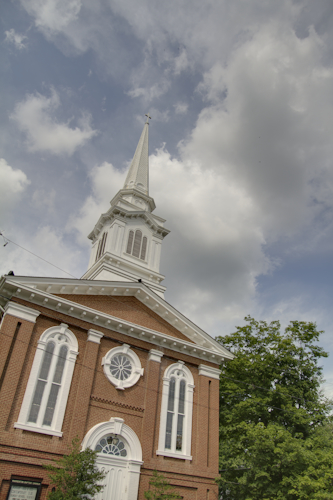 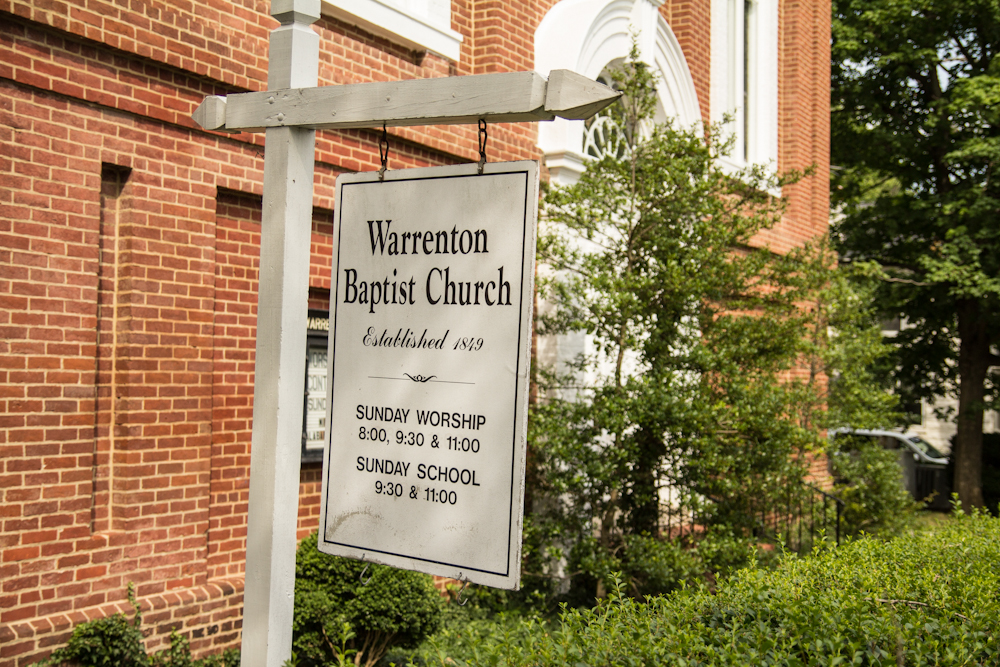 "Baptist Church" - In Old Town Warrenton, this Baptist church dates back from the antebellum period and acted as a hospital during the Civil War for the Union army.
The Breadcrumbs widget will appear here on the published site.
Jack Kerouac's American HaikuBy Claire Ledoyen QuailBellMagazine.com  All the insects ceased In honor Of the moon -28, Desolation Pops, Kerouac It’s Autumn of 1953 - a disillusioned, heartbroken Jack Kerouac shuffles into a public library wearing his notorious bedroom slippers looking for a literary escape. He just produced The Subterraneans, and about a year and half ago, penned his deliciously frenzied and bestselling work On The Road on a 3-week Benzedrine binge. The gloomy writer now comes upon Asvaghosha’s “The Life of Buddha”, and thus begins the period of his life that brought an influx of his own special kind of haiku. “I propose that the ‘Western Haiku” simply say a lot in three short lines in any Western language. Above all, a Haiku must be very simple and free of all poetic trickery and make a little picture and yet be as airy and graceful as a Vivaldi Pastorella.” –Kerouac, Scattered Poems Although I did see that quote on every other internet page I clicked on while getting into the gritty details of this assignment, its wide use is not without reason. Fortunately I had a high poetic form with rules and masterful expectations to live up to for reference after reading up on the history and form of classical Japanese haiku; just to have something with which to compare the ideas and ‘essence’-finding of the English haiku Jack Kerouac penned from around 1953 to 1966. Kerouac’s haiku are known for being “reworked and revised” constantly, unlike his other work. He tried to capture the essence of a thought, subject, or moment with his “Pops”, especially through an exemplary awareness of line breaks, or caesurae; and according to editor Regina Weinrich (Book of Haiku), the Kerouac image of a single thing in an open space. Arguments on both sides come up when discussing whether the Beat king’s English haiku could actually be considered haiku or not. Many people categorize them as Senryū, which is like a slightly funnier, more human thought and emotion-centered sibling of the haiku. Though any argument can be backed up, I think you have to look at Kerouac’s haiku as something beyond a Western attempt at any kind of the traditional Japanese art form. He strived to pen the essence of subjects through the essence of the form, and that’s what Japanese Haiku does after all of its rules and rigorous disciple and study. In fact, Kerouac studied Buddhism fairly vigorously, albeit dismissing Zen Buddhism, so basic Eastern philosophies provided a backbone to his work (especially the Noble truth of All Life is Suffering); plus, the Japanese “5/7/5” syllable pattern doesn’t translate from its original, fluid language into English and so his use of shorter lines effectively performs the same function as its traditional Japanese counterpart – relaying enormous meaning through few words put together simply. Here are examples of classic Senryū and Haiku next to Kerouac’s, selected from his “Book of Haikus” edited by Regina Weinrich, make your own comparisons - The robber, when I catch, my own son -Senryū Karai, father of Senryū form Autumn nite - my mother cuts her throat -Kerouac Moonlight slants through the vast bamboo grove: A cuckoo cries -Basho, haiku master Crossing the football field coming home from work the lonely businessman -Kerouac In both occasions, Kerouac’s haiku can go toe-to-toe with the masters’ in evocation of a simple, striking feeling and/or image, and he called them American Haikus for a reason – though no one in the US can see Mount Fuji out of any of their windows, the Beat king’s reoccurring image of Midwest plains interestingly gives a feeling of solitude and vastness similar to one a reader would experience from a Japanese haiku about an enormous bamboo grove (and I mean, I’ve seen some pretty vast corn fields, so…), the mountains (which we have too), forests (which we also have), or the ocean (if I need to say more, here’s another one of Jack’s more masterful American Haiku: “Useless! Useless!/- heavy rain driving/into the sea”). The majority of Kerouac’s collected haiku were found in his famous pocket notebooks, small notepads he carried in the pocket of his shirts for quick access at any moment, and in letters to his friends such as Gary Snyder and Allen Ginsberg. Snyder, a Zen Buddhist himself, is portrayed as Japhy Ryder in Kerouac’s The Dharma Bums, written in a kind of haiku-prose dissimilar to his other novels in its short, simple sentences. In fact, The Dharma Bums was loosely based, among other things, Jack’s stay as a fire lookout on Desolation Peak in the summer of 1956. From this experience came a collection of American Haikus called Desolation Pops (“POP-American haikus, short 3-line poems rhyming or non-rhyming…usually a Buddhist connotation, aiming towards enlightenment.” –Kerouac, Some of the Dharma). Though there are more philosophical and aesthetically beautiful pieces in the Desolation Pops manuscript, I love number 19 – Ship paint on An old T-shirt Like many of the other Pops, it personally gives me a remarkable rush of sensory stimulation with an incredible six words. There is something to be said in crafting such simple yet striking moments and scenes such as the Kerouac managed to create. There is a large number of Jack Kerouac’s America Haikus floating around his body of work. The best place to get started is definitely “Book of Haikus”, mentioned earlier, edited by Regina Weinrich. If, like me, you crave even more of Kerouac’s nontraditional haiku check out any of his letters and notebooks especially from 1953-1960, and he also did a record called “Blues and Haikus” in ~’58-59 with saxophonists Al Cohn and Zoot Sims which I would love to get my hands on oh man if you have one at a reasonable price I’ll buy it and I don’t even have a record player - Anyway, there are also two posthumously published works called Scattered Poems, which has a stand-out section of 26 haikus in the back and Trip-Trap: Haiku along the road from San Francisco to New York, written in ’53 and published in 1973 featuring Kerouac with Lew Welch and Allen Saigo on a trip to Long Island from California and back. The Breadcrumbs widget will appear here on the published site.
Timeless Style By Julie DiNisio QuailBellMagazine.com  “The beauty of a woman is not in the clothes she wears, the figure that she carries or the way she combs her hair.” Perhaps this is why we remember Audrey Hepburn and revere her as a style icon; she wasn't obsessed with looks or beauty. She knew that true beauty and grace comes from within. But this remarkably likeable female celebrity still experienced fame for her classic looks, on and off the screen. And her timeless style can still be duplicated today. Hepburn tried out a variety of hair styles during her career. She is most known for her elegant updos and short pixie cuts. Her iconic chignon in Breakfast at Tiffany's is as notable as the movie itself, her most famous role. In my opinion, the actress looked best when her hair was short or pulled back, revealing her youthful and unconventional face. Her beauty – the result of an English father and Dutch mother – was an oddity at the time, especially for Hollywood. But her willowy frame and pixie-like features forever changed female acting and modeling standards. She popularized a gamine look. Hepburn maintained a close relationship with French couture designer Hubert de Givenchy. They met on the set of Sabrina, for which he was designing her clothes, and Hepburn fell in love with his feminine yet simple, well-tailored designs. Givenchy designed the black dress worn by Holly Golightly in Breakfast at Tiffany's opening scene, considered one of the most treasured pieces of clothing from the twentieth century. Note that the dress was only worn in the one scene. Regardless of its short air time, it defined Hepburn's chic and elegant style. Givenchy also designed much of Hepburn's personal wardrobe. In her casual wear, she made use of several key pieces like white button-up shirts, skinny cut pants, fitted skirts and suits, and, of course, little black dresses. She often paired these pieces with kitten heels or ballet flats. And in terms of accessorizing, she knew the effortless drama a scarf, set of pearls, or pair of black, elbow-length gloves could add to any ensemble. If attempting to emulate Hepburn, adopt the motto “Less is more.” Hepburn once said about herself, “I never thought I'd land in pictures with a face like mine.” Nowadays, it's hard to imagine how she couldn't have gained such colossal fame with her classic, one-of-a-kind looks. The Breadcrumbs widget will appear here on the published site.
Voice By Jasmine White QuailBellMagazine.com 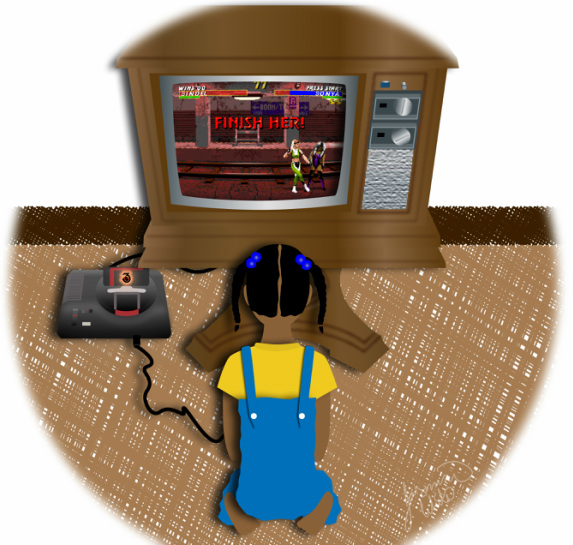 All references to Sega Genesis and Mortal Kombat 3 belong their respective companies. Image of MK3 is a shot taken by me. I am a murderer. My weapons of choice are twin blades, but I have experience with a wide range of lethal objects, including warhammers, hidden retractable knives, and whips. I do not discriminate against age, sex, or species. Men, women, and yes, children expire on my blade equally. I watch my blade release my enemy or victim into whatever afterlife they believe exists. And yet I had to learn how kill. I began my training in the art of death fifteen years ago at the innocent age of four. My parents bought Sega Genesis.
The Breadcrumbs widget will appear here on the published site.
Party Animals By Julie DiNisio QuailBellMagazine.com 
Despite the fact that the balloon animal and the art of its formation has been a favorite trick of clowns and children's entertainers alike, no one is entirely from whom the idea originated. It has been alleged that Herman Bonnert pioneered balloon modeling at a magicians' convention in 1939. Others presume that Henry J. Maar, famous clown known as the “Sultan of Balloons” was the originator. While either man – in addition to others - could be, Maar obtained far more fame for his tricks. In the 1930s, Maar was a vaudeville magician. The story goes that during an act, his props were stolen, and he was forced to rely on balloons to entertain his crowd. So he invented balloon modeling on the spot. The audience and his agents were crazy about it, and the rest is history. He went on to make his living by incorporating balloon animals into his clown act, even making appearances on a 1960 TV show called “Bozo's Circus.” Perhaps Maar could be viewed as a somewhat ridiculous character, considering his occupation. But let's not forget that he made a successful career off of balloon modeling, especially noteworthy since balloon animals are still being used today to entertain crowds of all ages. 
Illustrations by Laura Bramble The Breadcrumbs widget will appear here on the published site.
A Good Pair Somewhere between the summer of 1908 and the winter of 1910 there is a man hunting in the woods. He is hunting in those shale filled peaks on the Tennessee border. He lines up a shot on his prey and his overalls rip, causing him to miss his shot. He curses the stitch, the tailor, and the general store clerk who sold him the pants. He looks down at his pointer dog Carolina Bill and sighs. Bill continues pointing. It hits Landon Clayton King ( L.C. to everyone but his minister) that making a pair of pants canʼt be nearly as difficult as raising a champion pointer dog. He sets up shop in Bristol with his Pointer Brand and erects the L.C. King factory. About a hundred years later, that same idea of making a better pair of pants strikes a girl in Georgia. She quits her job and sets out to make it happen. Her name is Ashley James. She sets up shop in that same factory or at least the way I like to imagine it without the facts. It has a nice a symmetry.  We left before the dawn. After five and a half hours of driving and a couple stops for coffee and cigarettes, we pull off State street and onto 7th. Ashley James is hard to miss. She is leaning against that hundred year old brick, rolled up khaki overalls, dark wash denim jacket, and a slick billed Nets cap. If you have never been to Bristol, Tennessee, let me assure you that no one dresses like that there. We park across from the factory. Two stories of tan brick, large paneled windows that can be propped open and the raised letters of L.C. King. The entrance to the office that looks like it was last updated in the 1960ʼs. We spend a few minutes talking with Ashley outside before we head in. It is exactly as I imagined it would be. 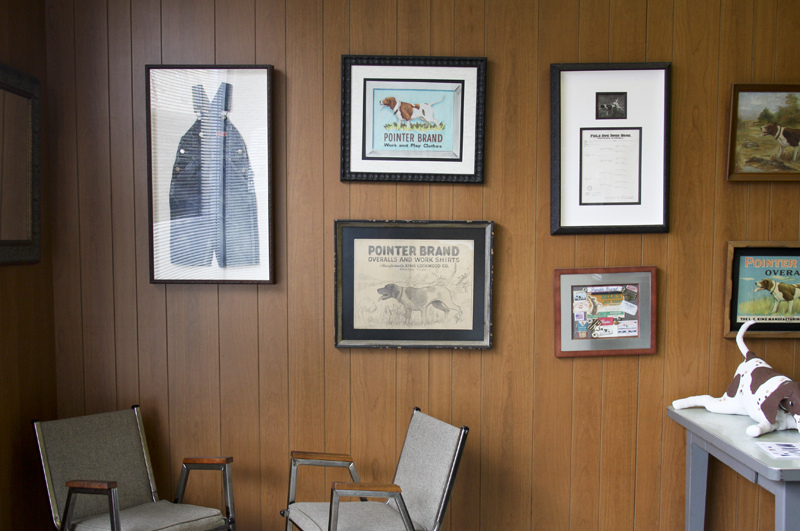 The walls are covered in wood paneling and the desks piled with papers. Ashley talks with the two receptionists as Jeff and I examine the walls. We look through framed posters of the brand logo, a framed pair of childrenʼs overalls that has been worn by every generation of the Kings, and a certified document showing the lineage of Carolina Bill and his pedigree. The receptionists welcome us in an accent that says they were born and raised in the Tennessee woods. They speak to us with big smiles and are uncommonly sweet. They ask Ashley how the overalls are working. She turns her foot to show her pants and says they are fine, with a smile. We walk through the door into the first level of the warehouse. Ashley points out what different machines are used for. There isnʼt much light beyond a few flickering fluorescents and the light from the second level. I am reminded of being much younger and playing in the empty offices and cubicles in the downsized administration building of a power plant that my father worked at. We follow Ashley upstairs to the “floor.” There are various types of sewing machines. Some are as old as the factory and some look brand new. There are wires that look like veins from the machines to the ceiling and to the rows of lights above our heads. The machines outnumber the people by probably four to one. It makes it seem like most people are on vacation or that we are visiting in off hours. We follow Ashley to the main room. People wave and nod and everyone seems to ask how those overalls are working. She has that same gracious response. We stop and talk with one woman sewing aprons. Mary has worked here for thirty years and is instrumental in helping Ashley manufacture Ruell and Ray.
The Breadcrumbs widget will appear here on the published site.
The Social Butterfly: Virginia Museum of Contemporary ArtBy QB Social Butterfly QuailBellMagazine.com  It can be odd to live in a place where people come to vacation. Virginia Beach, Virginia is just one of those places in Virginia. After enjoying the Boardwalk or one of the many fine restaurants in the area, how about stopping by the Virginia Museum of Contemporary Art and seeing what they have in store: Currently on exhibit through August 19: Andy Warhol: Portraits ANDYlab Fifteen Square Inches of Fame I Like Soup Rashidi Barrett Friday, July 20: 6:00 to 8:30 pm Studio 5 1/2 Family Dance Party Children 2 and up $10, members $7 Parents get in free, additional adult guests $5 Monday July 23, 30, August 6, 13: Extended Warhol Hours Tuesday, July 24: 6:00 to 9:00 pm Warhol Dinner Date Nights Zoe's Steak and Seafood Restaurant Eat at Zoe's and get tickets to see VMOCA's Warhol exhibit for free, good through the end of the exhibit run on August 19th Thursday, July 26: 7:00 pm to 10:00 pm POP the Question - MOCA Trivia Night Start the evening with a Curator's Tour of Andy Warhol's Portraits and begin pop culture trivia at 8 pm. $5 for members, $7 for non-members, cash bar Tuesday, July 31: 6:00 to 9:00 pm Warhol Dinner Date Nights Croc's Bistro Friday, August 3: 1:00 to 2:00 pm Family Conversation Tours Highlights Andy Warhol: Portraits Members get in free, $10 for adults, $7 for students, children 4 and under - free Saturday, August 4: 1:00 to 2:00 pm Adult Conversation Tours Highlights Andy Warhol: Portraits Members get in free, $10 for adults, $7 for students Tuesday, August 7: 6:00 to 9:00 pm Warhol Dinner Date Nights Cavalier Golf & Yacht Club OR Cobalt Grille Thursday, August 9: 5:30 to 8:30 pm Women + Pop: Lecture and Film Screening Seductive Subversion: Women Pop Artists film screening with an introductory lecture by art historian Dr. Linda McGreevy Free with admission to museum, members free - also, students, teachers and professors free for this event, $10 for adults, $7 seniors Tuesday, August 14: 6:00 pm to 9:00 pm Warhol Dinner Date Nights Burton's Grille Friday, August 16: 10:00 to 11:00 am Pre-K Art Days Hands on activities and creative movement exercise. Ages 3 to 5. Pre register online Sunday, August 19: 1:00 to 4:00 pm Warhol Family Fest Last chance to explore Andy Warhol: Portraits on closing day. Enjoy hands on activities and learn about Warhol and his art. This event will feature a food drive to benefit the Foodbank of Southeastern Virginia, so bring your canned goods. Event is free. The Breadcrumbs widget will appear here on the published site.
The Ryze of eSports By Tyler Withrow QuailBellMagazine.com  The latest craze in the modern world is eSports, or competitive gaming. A scene that has been popular in Korea since the release of Starcraft in 1998 (and most likely before it) is now coming not only to America, but Europe as well. With the wide proliferation of newer games such as Starcraft II, League of Legends, and DOTA 2, competitive gaming is on the rise. What was previously a reclusive activity has become televised, played live in front of thousands of people, and streamed live to computers across the world. The most popular of these games, however, is undoubtedly League of Legends. What started out as a small community of gamers playing against each other in the beta test quickly became a giant. The game was fun to play, competitive, and invited all manner of players to join in. Better yet, it was free to play. Just recently, according to Forbes magazine, League of Legends topped the charts in terms of hours played, having reached roughly 1.2 billion hours of gameplay. This nearly doubled the hours played by the previous king, Blizzard’s World of Warcraft. League of Legends is a new type of competitive game that has just recently appeared, rapidly gaining fans and players alike. The category it falls into is a MOBA (Multiplayer Online Battle Arena) game, which originated from the game Defense of the Ancients, which was a modified version of Blizzard’s Warcraft III. A MOBA game pits two teams of 5 players against each other, each team vying to destroy the other’s base, or nexus, while protecting their own. The nexus is protected by three lanes of three towers each, forming a diamond-like shape that composes the map. Players must destroy all three towers in at least one lane in order to reach the nexus. The game is at once complex, challenging, and rewarding, pitting players against each other in a battle of both wits and skill. What is most amazing is the fact that League of Legends players have gone professional. Companies entirely dedicated to eSports are being created, some solely for League of Legends, but others encompassing as many types of competitive gaming as they possibly can. Team Solo Mid, Team Curse, Dignatas, and Counter Logic Gaming are just a few of the companies that have formed just recently. And those are only the American ones. These teams are playing in tournaments almost monthly with tens of thousands of dollars on the line. Players on professional (yes, professional) teams are paid well for their time by the companies that hire them, with some players claiming to make upwards of one hundred thousand dollars a year. After roughly three years of rapid growth, League of Legends and games like it show no signs of diminishing in their player base. In all certainty they could keep growing. At this point, the future is very bright indeed for eSports. The Breadcrumbs widget will appear here on the published site.
Suit up in Vintage Swimwear By Julie DiNisio QuailBellMagazine.com Today's women's swimwear is a far cry from its first incarnations. Because of the advent of rail travel in the early 1800s, seaside travel became more accessible. The bathing suits, on the other hand, were hardly as comfortable. At first, women wore full length, long sleeved muslin dresses with weighted hems for full coverage and modesty. Gradually, the outfits became less constricting, featuring bloomers, lighter fabrics, and shorter hemlines. By the 1920s, the bathing suits were only one piece of a light, wool fabric which showed off an unprecedented amount of shoulder and leg. A decade later, swimwear was being made out of figure hugging latex material. And in 1946, the groundbreaking bikini was first modeled in Paris by a French stripper, the only woman willing to show her navel in public (at the time, a big no-no!). It took a while to catch on – in the '50s, many women, including Marilyn Monroe, wore bathing suit tops with corset-like structure and bottoms that went above their waist, only showing a little stomach if any at all. Not until the 1960s, when private swimming pools became more popular, did women start feeling comfortable baring it all in bikinis. 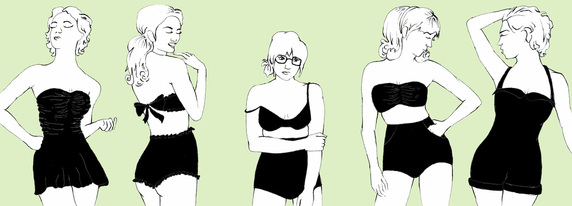
Illustration by Kristen Rebelo As the years progressed, Spandex hit the scene, and bathing suits proceeded to become more figure hugging and less skin covering. Nowadays, “retro” bathing suits have become a popular choice for those looking to add a little vintage flair and perhaps hide their trouble areas. Reproductions are easily found, just do a Google search. But for the truly brave, vintage bathing suits are out there. Etsy is a great place to start. Dear Golden has several vintage bathing suits for sale. Another website, Rusty Zipper, has some good, pretty affordable finds, though be prepared to search a little harder for something cute. If you'd rather see the bathing suit in person, visit a local vintage store. Bygones in Richmond, Virginia carries both vintage and “vintage inspired” swimwear. Nearby Halcyon Vintage has similar stock, with styles from a range of decades. Bear in mind that no vintage store will have a plethora of truly vintage bathing suits. They can be a little hard to come by but worth it once found! The Breadcrumbs widget will appear here on the published site.
Fairy Food: Little Miss Muffet's Curds and Whey By QB Chef QuailBellMagazine.com 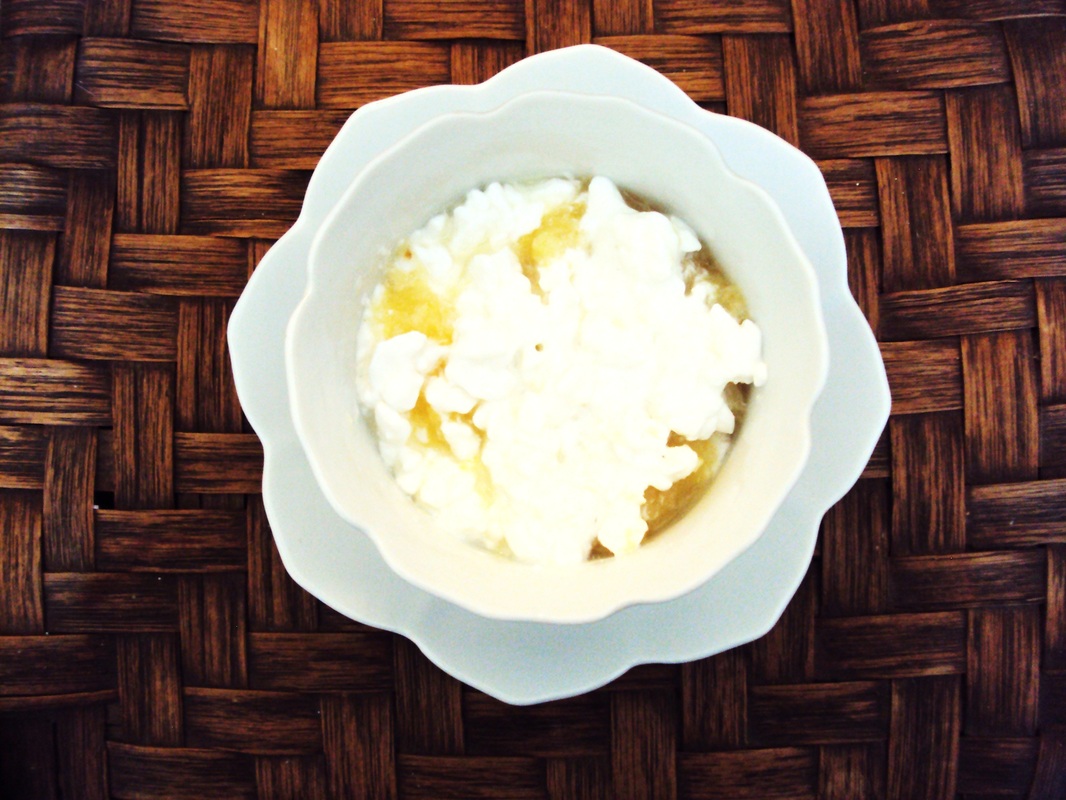 Need to add a boost to your morning routine? We have the fairy solution for you! This enchanting breakfast treat will help you stay energetic and focused throughout the day. You will need a pineapple and a few scoops of cottage cheese (or if you aren’t a big fan of actual curds, you can swap the cottage cheese with your favorite yogurt). First, take your fresh pineapple and chop it into small cubes. Add the chopped pineapple to the cottage cheese and you have a refreshing breakfast creation, perfect for any magical morning. Enjoy! The Breadcrumbs widget will appear here on the published site.
The Vilkacis By Julie DiNisio QuailBellMagazine.com  To become a werewolf, one has to go about the pesky business of actually finding a werewolf, then getting bit by it. Though not commonly known, there is an easier way. In Latvian mythology, the Vilkacis is a werewolf-like creature that transforms from human to wolf by hanging out under a certain type of tree on the night of a full moon. One can also make the change by wearing a wolf skin and uttering some magical phrases. In Latvian myths, it is more common for women to turn into Vilkacis. They have to strip down and leave their clothes where no one will touch them. If someone does, they cannot turn back into human form for many years. But in some cases, the mythology is reversed. It is believed that humans can send their souls into wolves' bodies, a risky maneuver since retrieving the soul can be difficult. Thus, the varying stories surrounding the Vilkacis have caused people to question whether they should be classified as werewolves or witches. Regardless, they are not considered malevolent beings. The Breadcrumbs widget will appear here on the published site.
A picture is worth a thousand of words By Rachel Jones QuailBellMagazine.com  Courtesy of ArrestedMotion.com What does it mean for a community to have murals among its streets? It is not uncommon for many cities across the U.S. to have large murals cleverly and sometimes discreetly painted on the sides of their buildings. Often times they are done by industries as advertizing, yet there is another “breed” of mural done by street artistes often referred to as graffiti artists, whose craft is considered low-brow art. Over the past decade graffiti art has moved up the ranks in the art world, no longer associated directly with gangs but rater as a form of visual expression. The artists have become recognized and even sponsored, creating an uprising of “art crimes.” In Richmond, Virginia it is not uncommon to see “Freak” or “Expert” tagged on the sides of buildings. More impressive is the G40 art summit where artists were chosen to make twenty large-scale murals throughout the cities, literally transforming the landscape to an inspiring experience. A picture is worth a thousand words and this is no exception for the murals that are placed on the city’s streets. It sheds light on the people that live there often telling a story that cannot be told in words alone. It reaffirms the importance that art can have on a community giving its people something to identify with, similar to that of a mascot. As times change, these pieces will remain testament to the years before and the years to come. The Breadcrumbs widget will appear here on the published site.
22 Hours in Historic Ellicott CityBy Starling Root QuailBellMagazine.com  If you think Baltimore is a crime-ridden hell hole, you've watched too many episodes of "The Wire." Calm down and take a relaxing trip to Historic Ellicott City, located not quite half an hour from B'more and less than an hour from Washington, D.C. This is a suburb that won't make you yawn, while still carrying B'more's trademark charm. Historic Ellicott City will remind you more of fairy chimes and old-fashioned train sets than it does housing projects and auto theft. It's like Cracker Barrel come to life--except family-owned! I recently took a whirlwind trip to this old mill town, hitting Main Street with the gusto of a serious antiquer. And by whirlwind, I mean Tasmanian Devil fast. Try 22 hours! The best part was that I had so much fun just browsing that I only spent money on food. I highly recommend the gnocchi with lump crab and asparagus at Cacao Lane Restaurant. (The sweet, green-eyed waiter wasn't too bad, either.) While the district's restaurant selection is small compared to say, Old Town Alexandria's, Ellicott City's look and feel is unlike anything else you'll find in the D.C.-Baltimore metropolitan area. Dating back to the 1770s, Ellicott City is full of granite stoneworks. At one time, Ellicott City was one of the biggest mill towns on the East Coast, also famous for its wheat farms, train station, and trolley service. One that last note, Ellicott City has a restaurant named The Trolley Stop. While I did not have a chance to dine there, I did park right by it. Another perk of visiting Ellicott City? Ample free parking in a region famous for its traffic and parking problems. If you're looking to drop some pretty cash on some pretty things, Ellicott City boasts a cute assortment of vintage and vintage-inspired shops. Jewelry craving? Satisfy it at Vintage Bliss. Need funny signage with an aged look? Hit a Journey from Junk. Want a dragon or unicorn? Wrangle one at Forget-Me-Not. Need shabby chic furniture? Shoemaker Country carries 18th and 19th century design elements into contemporary living. Unfortunately, because I arrived late in the afternoon on Saturday and left on Sunday, I missed Ellicott City's museums. But from what I've read, they give me another reason to return to this gem on the Tiber River. If you have a chance to visit Ellicott City's museums, please let me know how they are. (You know how much QB loves mail.)  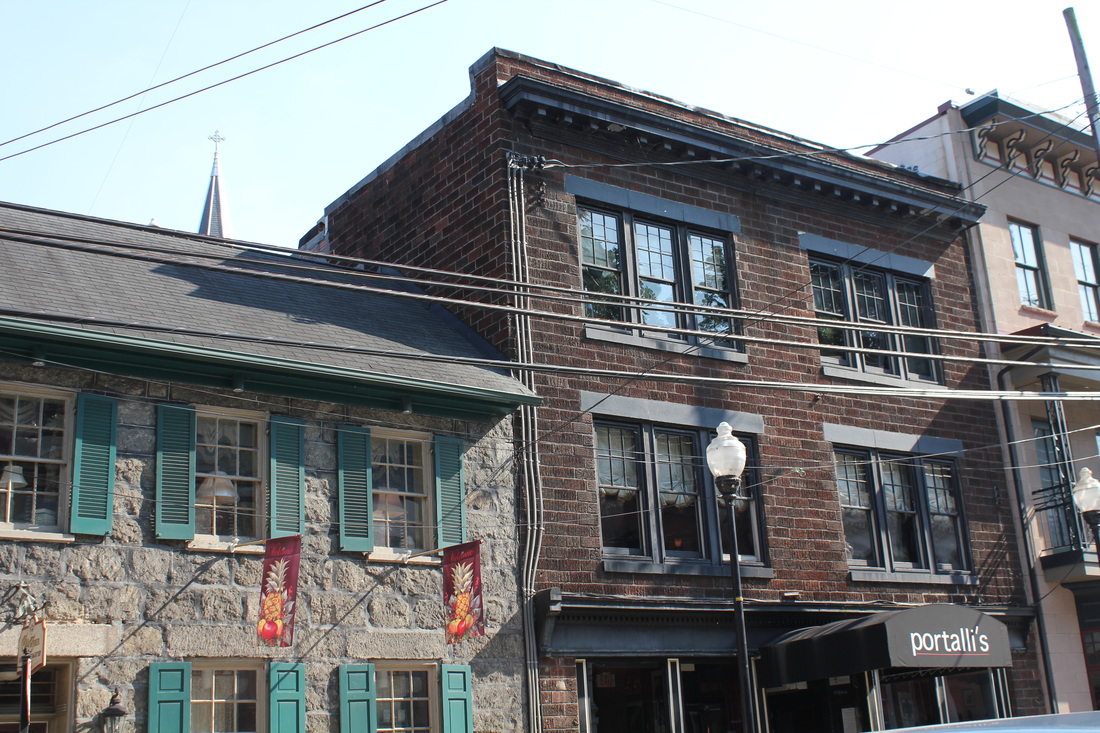 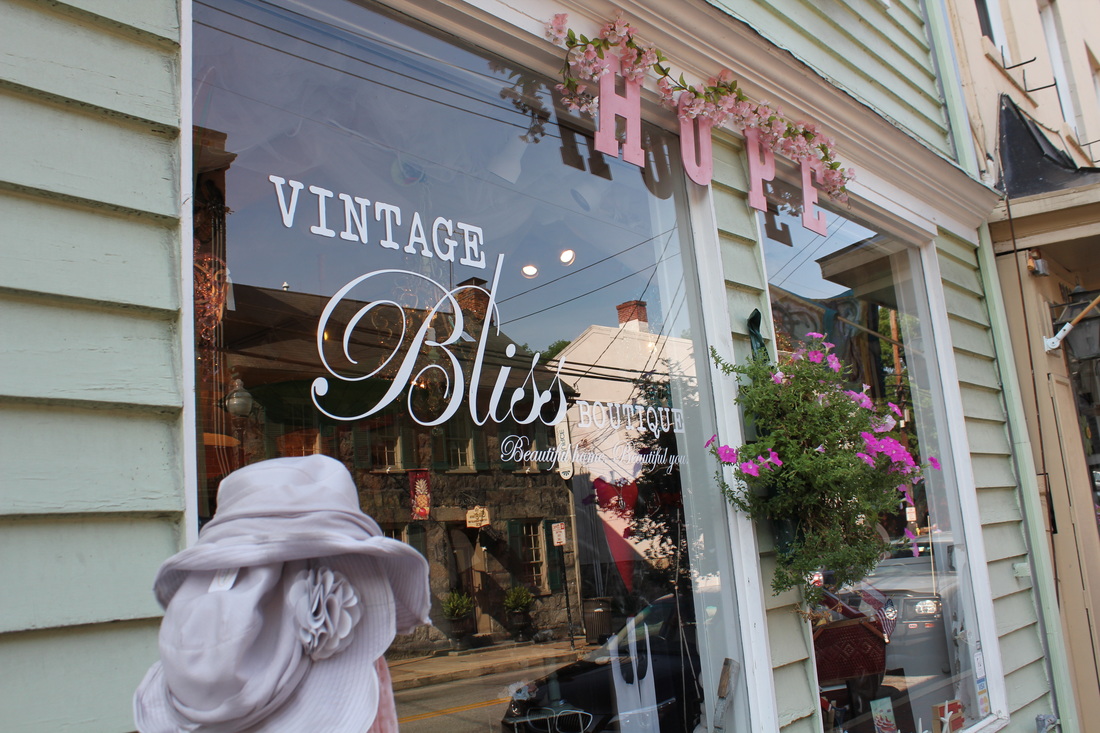  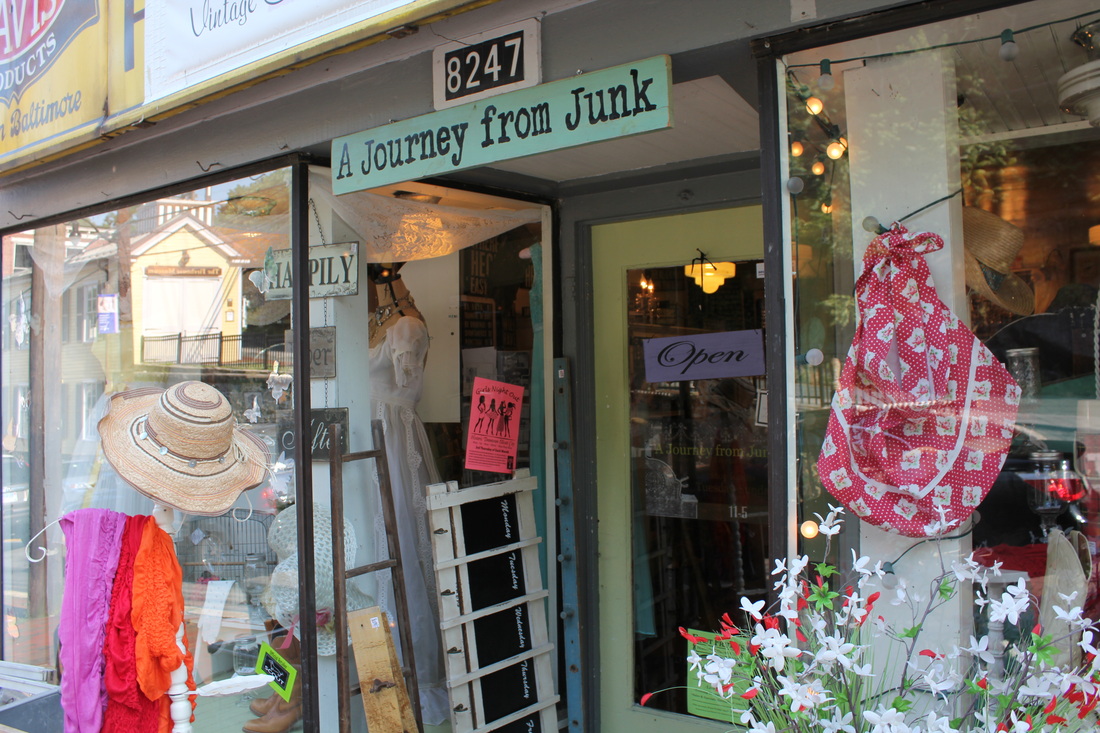 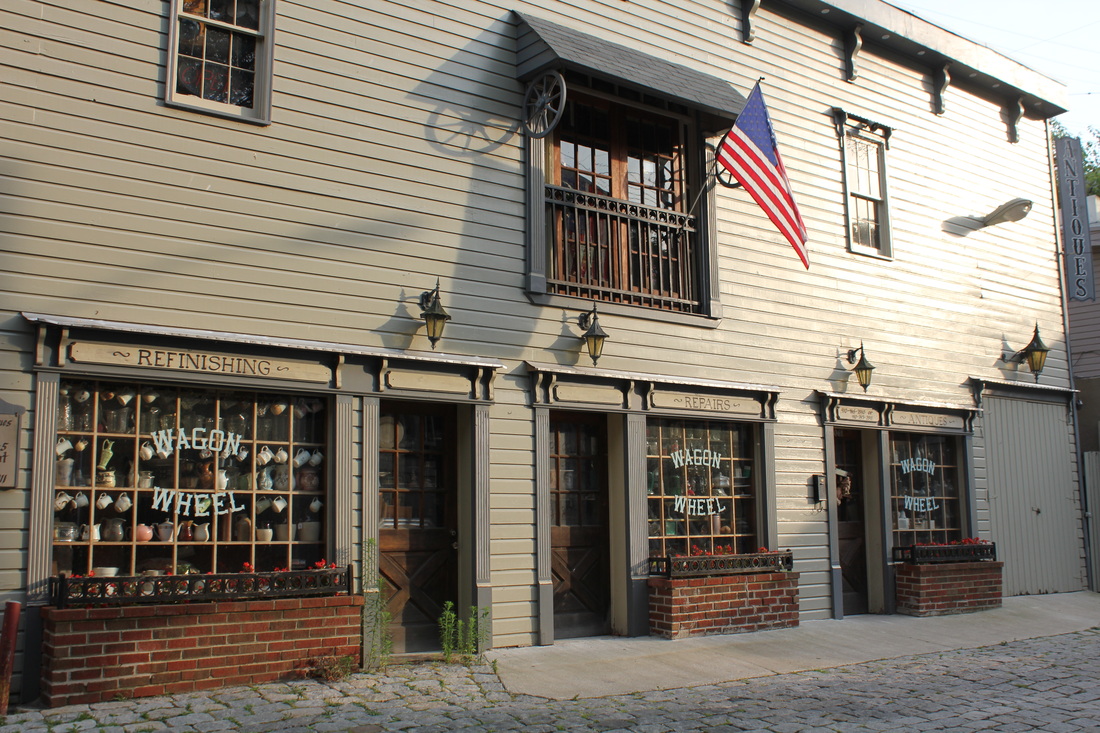 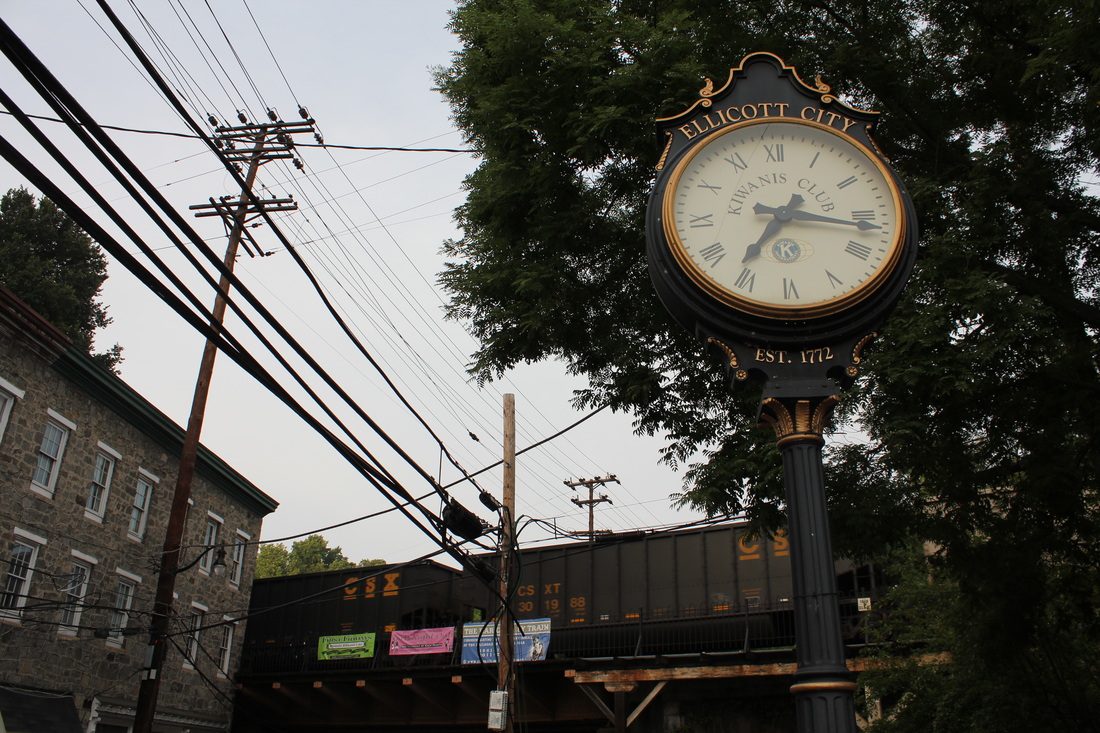  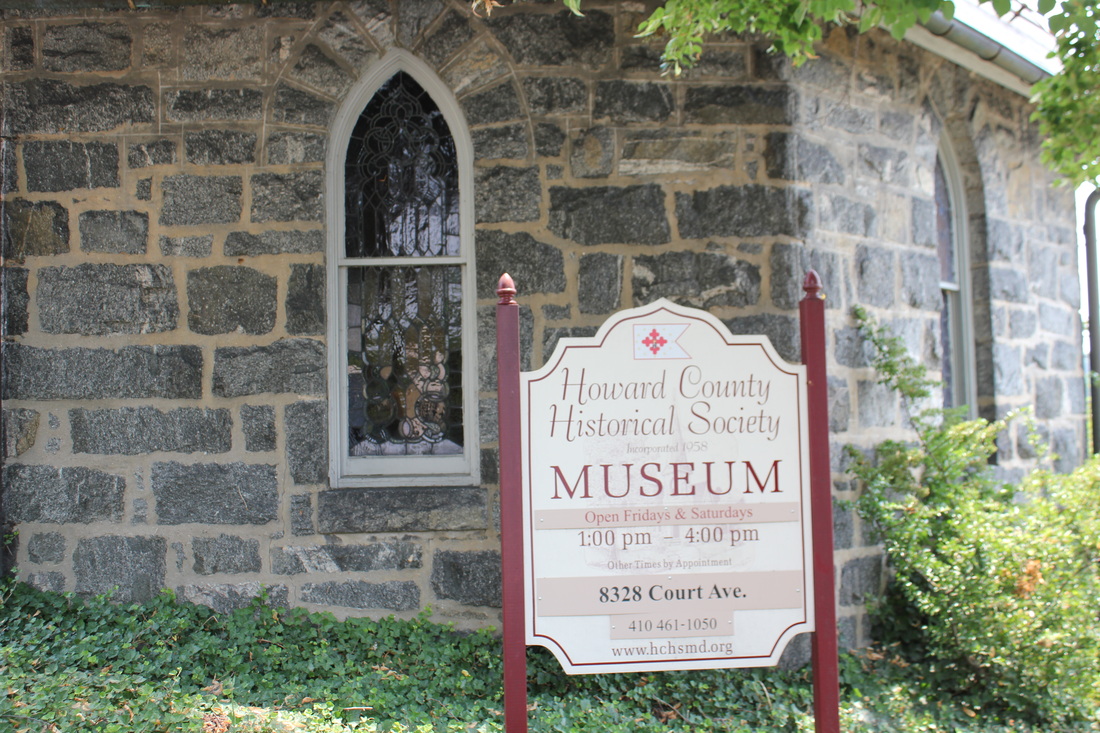 The Breadcrumbs widget will appear here on the published site.
Magic with your ice creamBy QB Camera Eye QuailBellMagazine.com 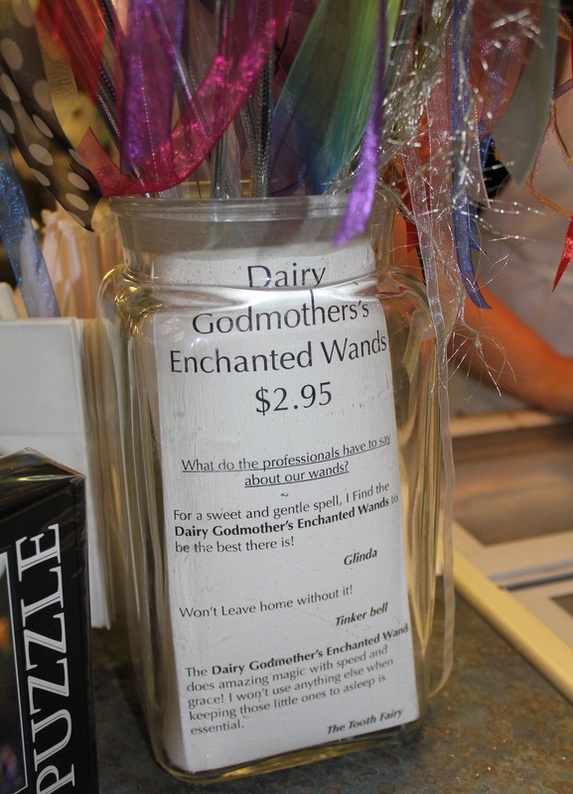 Spotted at the Dairy Godmother, an ice cream parlor in Alexandria, Virginia's artsy Del Ray neighborhood. Beat the heat with a little magic, eh? The Breadcrumbs widget will appear here on the published site.
Squatting's For LadiesUsing a public restroom is an under-appreciated art, ladies, but don’t let that discourage you. There is hope for you less artistically inclined dames. While I hardly consider myself an expert, I do have a fair amount of experience in the matter. I’ve graced restrooms in thirty-seven different states, from gas stations to fat cat hotels. In other words, I know how to squat, girls. And you should, too. But let’s begin ante-squat, shall we? Let’s start with the art of padding. All women must become skilled toilet-padders. After all, if you think your derriere is dirty, think of how filthy someone else’s birthday seat is! Or, rather, don’t. It’s not a pleasant thought. The point of padding is to create a barrier between your germies and the germies of all the women who have used this toilet before you. And chances are, there have been many...but let’s not get into that. Start by washing your hands (preferably with your own travel-size anti-bacterial soap) and then grabbing several sheets of paper towel. If there is no paper towel, then you will have to use regular toilet tissue instead. And if that’s not available, well, then I pray you brought some paper with you, or else you’ll have to skip this step altogether. (Or maybe it would just be better to hold it, eh?) Now pad every inch of the toilet seat. I mean it---not one nanometer of that repulsive breeding ground for anal bacteria should be visible. (And you may want to do this while wearing rubber gloves, too.)  Once the seat is COMPLETELY padded, you must proceed to squatting because padding alone simply is not enough to ensure your absolute protection. There are three ways in which you can approach these commode gymnastics:
The first method requires you to place your feet on the seat and then, well, you know. The benefit of this method is that you are better able to control your aim than in the second method, which requires you to hover over the seat. Keep your feet on the floor and then position yourself over the seat without actually touching it. This method definitely demands strength, but unlike the previous method, you do not have the danger of slipping and dunking your shoes into the toilet bowl or falling off the toilet altogether (Ouch and eww if you’re unfortunate enough to hit the floor). The Breadcrumbs widget will appear here on the published site.
Choose Your Post-industrial Ville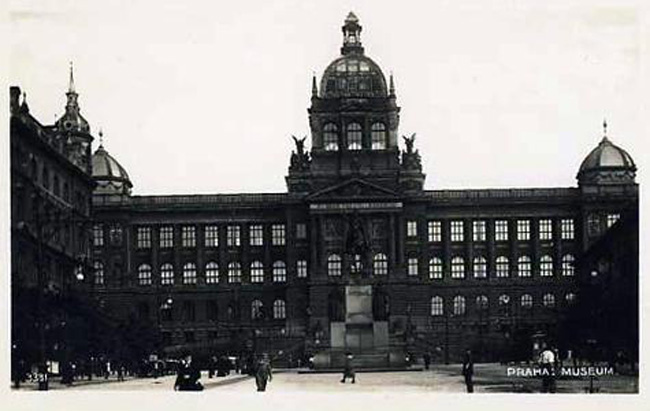 The Breadcrumbs widget will appear here on the published site.
Bumper BrainsBy QB Camera Eye QuailBellMagazine.com  That yellow bumper sticker teaches you all you need to know about skewed priorities in the American education system. Support your arts programs! The Breadcrumbs widget will appear here on the published site.
Theatre According to Leland FaulknerBy Christine Stoddard QuailBellMagazine.com  When Leland Faulkner spoke to a class at Virginia Commonwealth University on Nov. 3, 2008, he decided to present his "philosophy on everything" related to the "great game that we call theatre that's really a metaphor for life." And just what was that philosophy? That actors should revel in theatre's magical energy and feed off of the audience's response.Faulkner's worn black fleece, faded black jeans, and old black tennis shoes painted him as a plain, unassuming man unlike the wise and sensitive fellow he proved himself to be. After all, over 30 years of professional theatre experience must have enlightened him somehow. Now it was his turn to enlighten over 120 young minds. He told the Drama 211 class, full of over one-hundred blossoming actors, playwrights, techies, designers and theatre enthusiasts, "Nothing is like live theatre---the person to person communication is the heart of this art form." Faulkner began his theatrical training as a 17-year old apprentice of the legendary mime, Tony Montanaro. Montanaro ran a one-man show on Broadway during the 1950s. He taught Faulkner the language of gesture, the sources of movement and the art of improvisation. Faulkner is grateful for his training as a mime because he learned the "eloquence of the body." He explained the importance and difficulty of being able to communicate solely with the body and not necessarily any words. Actors have to go off of a mood, interact with the audience and observe what the audience does. "Responding...that's what the audience does," he noted. Faulkner quoted the famous improvisation teacher Keith Johnstone in saying, "We get taught to be bad performers." He emphasized, "We're not used to breaking the social boundary but we have to...It's hard for us to please the other actor that we're working with and the audience" because "we've been taught not to trust our experience." But if actors follow the current running through the moment of a performance, success will be theirs. Theatre must be organic. "When anything that becomes a pedagogy that's too strict and constrained, the science of it's interesting but something you lose the quality of immediate expression." In an effort to demonstrate the value of immediate expression, Faulkner orchestrated one of his favorite exercises developed by theatre teacher Jacques Lecoq. The exercise shows what Lecoq called the "seven levels of tension." Faulkner called for seven volunteers who sat down upon the chairs set up on stage. The volunteers had to engage in the seven levels of laughter, ranging from a slight smile to an all-out, knee-slapping guffaw. T he first volunteer smiled faintly and then "passed" the laugh by making eye contact with the person to his left. Each volunteer had to express the same level of laughter. With each round, the volunteers became louder and louder until finally they were outright hysterical. The audience naturally followed suit without any kind of instruction to do so. "As the laughter traveled, you traveled with the laugh," Faulkner told the audience after the exercise was through. "For me, the byplay is what it's all about." LelandFaulkner.com The Breadcrumbs widget will appear here on the published site.
Maggie Mayhem has struck again!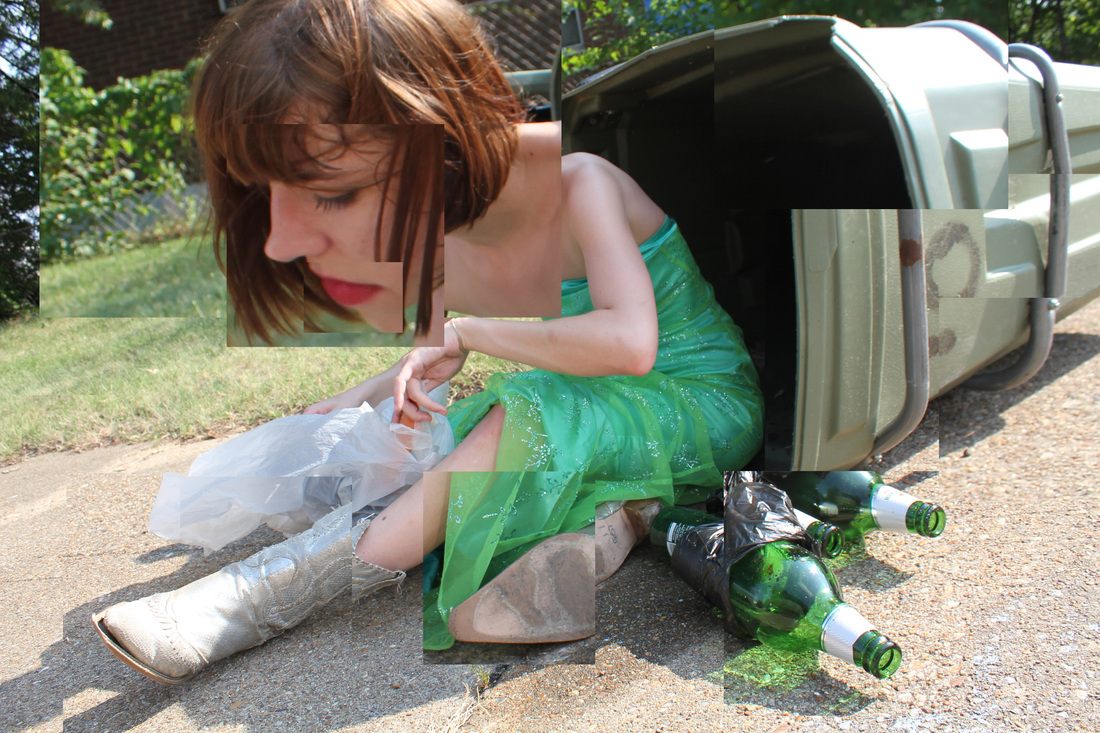 We found Maggie Mayhem lurking in the bushes outside of a corner store again...so we decided to photograph her (again.) Check The Unreal for "The Garbage Fairy"--coming soon! The Breadcrumbs widget will appear here on the published site.
Fantastic Thrift--Rightfully NamedBy Paisley Hibou QuailBellMagazine.com 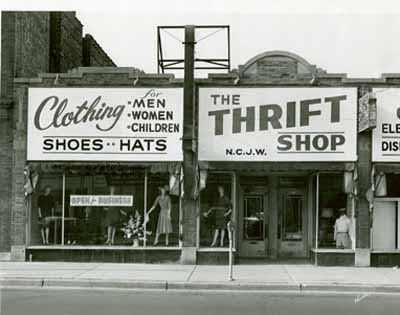 (Pictured above: Not Fantastic Thrift...but still pretty cute.) Even before I moved to Richmond, Virginia and the economy took a nosedive, my spending habits could only accurately be described as 'frugal.' I search for low prices but I'm not stingy to the point of grieving over every last penny handed to the cashier at check-out time. Otherwise I wouldn't be such a huge fan of Fantastic Thrift (1914 Main St.), where the prices are reasonable and sometimes even true bargains but they wouldn't excite someone who chose to put her last $5 or $10 towards clothes, either.Fantastic may not give anything away for practically free, as church and hospital run thrifts shops are famous for doing, yet their quality selection is very, very tempting---especially in a fashion-aware city at a time when the whole country's concerned about the economy. Trust me, you'll want to give Fantastic Thrift a try if you haven't already. Let me tell you about what I picked out during my latest visit: The Breadcrumbs widget will appear here on the published site.
The Breadcrumbs widget will appear here on the published site.
Stop and Smell The RosesBy Alexander Kafka QuailBellMagazine.com With the heat steadily rising and sending tail feathers ruffling with displeasure, a fledgling can forget the beauty that lurks around every corner during the warmer months. So throw on an airy summer dress and go out and explore this world and all the gorgeous things within it.     |





© Quail Bell Press & Productions, 2024. Founded by Christine Stoddard. Based in Brooklyn. Contact us.